Who Can File a Mesothelioma Lawsuit? The Role of the Lawyer
Mesothelioma is a malignant neoplasm mostly linked to exposure to asbestos fibers. Given the long-term use of asbestos in construction, manufacturing, shipbuilding, factories and other workplaces, a person diagnosed with mesothelioma may have several legal options for filing a lawsuit.
A mesothelioma case is a legal claim against a company or some other entity which may be held liable for exposing a person to asbestos. The defendants may vary depending on the circumstances and include manufacturers of asbestos-containing products, suppliers, contractors, employers, owners of properties, and other entities.
A person diagnosed with mesothelioma may be able to file a personal injury lawsuit based on evidence linking mesothelioma to exposure to asbestos and establishing grounds for legal liability of someone else. Yet, just being exposed to asbestos is not enough to file a successful mesothelioma case.
The relatives of the patient may also have legal options. In the case of a person with mesothelioma dying, there may be grounds for filing a wrongful death claim or continuing certain claims after his or her death according to the laws of particular state.
One of the key factors in filing a mesothelioma lawsuit is to establish time and place of exposure to asbestos. It is quite challenging given that mesothelioma develops over a few decades, so that now a person may need to investigate his or her employment and exposure history dating back to many years ago.
This investigation may include finding former places of employment, job locations, any military service, used products, photos of workplace, documents and even names of co-workers remembering the circumstances.
As the laws differ from state to state, a mesothelioma lawsuit must be discussed with an experienced lawyer as soon as possible
One of the key issues regarding the legal actions that need to be considered in a mesothelioma lawsuit is the statute of limitations. The statute of limitations is the time period during which one may initiate a lawsuit. Filing a lawsuit after the statute of limitations period passes would result in inability to pursue the lawsuit further.
There is no nationwide uniform statute of limitations for mesothelioma lawsuits. It depends on the state, the specific claim one wishes to make, place of asbestos exposure, one's residency and other factors.
In light of the long latency of the disease, there are some peculiarities of the statutes of limitation in mesothelioma cases. In some states, special provisions exist regarding the starting point of the statute of limitations period. In some cases, the period may start from the discovery of the illness.
One should not presume automatically that a long-past exposure automatically results in expiration of the statutory limitations period. The relevant law needs to be analyzed according to one's individual situation.
One needs to contact an attorney specializing in asbestos or mesothelioma litigation to analyze one's case and initiate the legal process.
As a part of the initial consultation, a lawyer may inquire into one's diagnosis, treatment, work history, any military service, residences, exposure to asbestos and other information.
At the initial consultation, the possible defendants, types of lawsuits that may be brought up, filing deadlines, possible sources of recovery might be discussed as well.
After that, a decision to conduct further investigation before filing a lawsuit can be made by an attorney.
Since it is often very hard to find evidentiary materials regarding an incident that happened decades ago, it is very useful to start conducting the investigation as soon as possible. Employment records might have been destroyed, companies might have undergone a change in ownership and witnesses might be hard to locate.
Thus, it is recommended not to delay the process of investigation
Once an attorney decides to take the case, a legal team might start gathering evidence.
Medical records may be especially important in a mesothelioma case since they will help prove the diagnosis and get information on a patient's health condition. The attorney might also investigate the person's employment and possible sources of asbestos exposure.
The investigation may include former employers, construction sites, factories, shipyards, military facilities, products, suppliers, contractors, and any other entities related to asbestos exposure.
The lawyer might conduct interviews with former coworkers and other witnesses. He or she might also analyze historical documents, product information, workplace records, photos, lawsuits regarding asbestos products.
Such investigation is aimed at determining if there is any evidence of the connection between the client's asbestos exposure and some parties.
Sometimes the mesothelioma lawsuit involves more than one defendant since a person has had contacts with asbestos-containing products made by different companies in different jobs.
But the attorney should have evidence that proves such a connection since he or she cannot bring some company to court without any reason.
There were also many asbestos-related companies which went through bankruptcy proceedings. Some of these companies established asbestos trust funds for dealing with claims. The trust-fund claim is not a lawsuit, and the rules differ depending on the trust.
Once the attorney decides that the litigation is necessary, he or she will file a complaint to the corresponding court.
This document usually identifies parties, mentions the case of asbestos exposure and the injury, states the claims and asks for compensation or other action.
Then the defendants should be officially notified about the lawsuit. Defendants will have a chance to react to the lawsuit.
Later the case will proceed to the next steps of litigation
Discovery is another stage of a mesothelioma case. Discovery refers to exchange of information and evidence between the parties during pretrial procedures.
In this regard, discovery might consist of requests for interrogatories, requests for production, depositions, and many other actions that might help gather evidence to prove the facts of the case.
Discovery of evidence during a mesothelioma case might include medical records, employment history and documentation, details of workplace, records about asbestos products, photographs, witness testimonies, and expert evidence.
Depositions might also be a valuable procedure of a mesothelioma case. Deposition refers to answering questions under oath, while the deposition testimony is transcribed by a court reporter. Lawyers might ask questions to the plaintiff, witnesses, representatives of corporations, and experts.
Since asbestos litigation involves complex medical and historical questions, expert witnesses might offer their testimony to establish issues related to diagnosis, asbestos exposure, workplace, or any other question.
Not all civil cases result in a trial. Many of them end up in a settlement.
Settlement negotiation involves discussion of the possibility to solve the case without a trial for an agreed amount. It gives an opportunity to resolve the case without going through a trial.
It should be mentioned that the value of a mesothelioma case is not guaranteed to be known in advance. Medical expenses, lost wages, the strength of the evidence, level of exposure, applicable laws, and other factors might influence the value of the case.
When the parties do not come to terms of a settlement, the case moves to trial.
Both parties have a chance to present their evidence and to question witnesses at the trial. In a mesothelioma case, the plaintiff must show that all elements of the legal claims are proved under the applicable laws.
Ultimately, a judge or jury makes a decision on the responsibility of the defendants and, possibly, on the amount of compensation
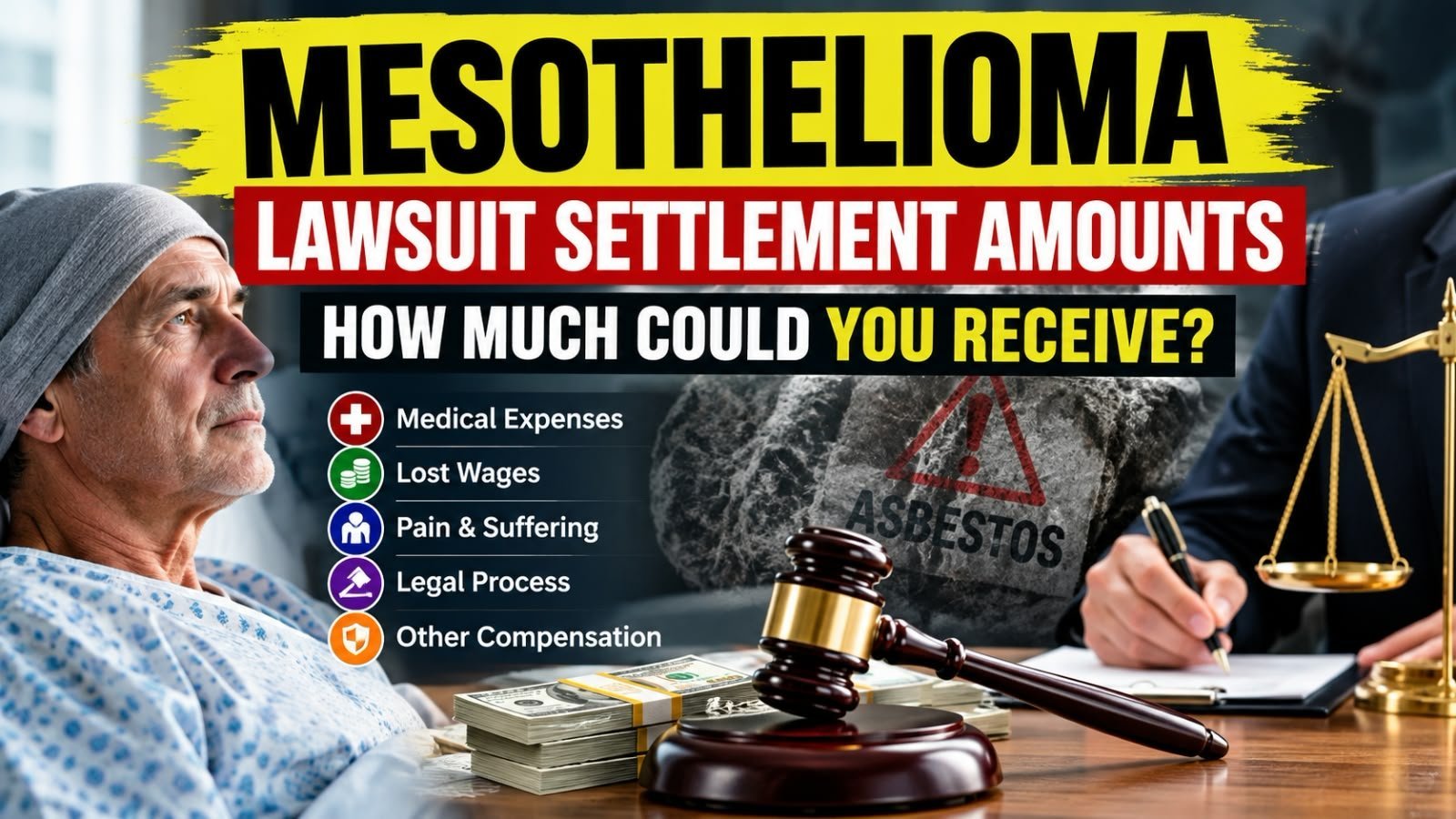
The amount of compensation in a case of mesothelioma depends on the facts of the matter as well as the applicable laws.
Possible damages include medical bills, loss of wages, diminished earning ability, and pain and suffering, among other losses recognized by law. In a case of wrongful death, qualifying family members or a decedent's estate may have possible claims for additional damages.
In addition, some people may have potential claims related to asbestos bankruptcy trust funds. Such claims are different from ordinary claims and eligibility is determined according to the criteria set by each trust fund.
Every mesothelioma case has its own unique timeline, which may range from a short period in case of a settlement to a much longer period of time for complicated cases involving multiple defendants. This depends on many factors such as the particular court, discovery, number of defendants, amount of evidence, negotiations, and possibly trial.
It may be helpful to try to save important information as soon as possible upon diagnosis of mesothelioma. This may include information such as your medical records, your employment history, names and address of former employers, workplaces, military service record, use of products at your work places, photographs, and names of former co-workers.
It should also be mentioned that the statute of limitations applies to asbestos claims and there may be different limits for different jurisdictions and situations. Therefore, prompt legal advice may help you to avoid a statute of limitation bar on your case.
Mesothelioma litigation may include several steps, such as initial consultation, investigation, identifying of possible defendants, filing of a lawsuit, discovery, settlement negotiations, and trial if needed.
The most essential thing in such cases is to prove the existence of a legally sufficient connection between the exposure to asbestos, the disease, and a possible defendant.
As a consequence of the complicated medical, historical, and legal nature of asbestos litigation, people affected and their families may consult an attorney specializing in such cases.
Legal Disclaimer: This article is for informational purposes only and does not constitute legal advice. Asbestos and mesothelioma laws and rules vary by state and particular circumstances. A competent attorney must be contacted to discuss any particular situation.
Editorial & Jurisprudential Disclaimer: This publication is prepared strictly for educational, academic, and legal research purposes and does not constitute formal legal counsel. For specific legal representation or jurisdiction-specific advice, consult a licensed attorney admitted to practice before the competent bar.